
When educational content is not designed with accessibility in mind, students in universities and higher education institutions may struggle to engage fully with lectures, assessments, research materials, and digital learning resources. This is why universities, colleges, and higher education institutions must prioritize accessibility—not only to meet legal and accreditation requirements, but also as part of their ethical responsibility to ensure equitable access to education.
Accessible educational materials help create an academic environment where students from diverse backgrounds, abilities, and learning needs can succeed. In this blog, we’ll explore practical steps universities and higher education institutions can take to ensure learning materials remain accessible for all students.
Practical Strategies to Ensure Learning Accessibility for All Students
Creating a truly inclusive classroom requires a thoughtful, system-wide approach. The following strategies can help universities, colleges, and faculty members design, deliver, and maintain accessible learning materials that support all learners effectively.
1. Apply Universal Design for Learning (UDL) Principles
Universal Design for Learning encourages flexibility in how information is presented to students, how they can engage with content, and how they demonstrate their understanding. The fundamental principle of this is to offer multiple inclusive teaching and learning formats, such as text, audio, visuals, and interactive elements, to reduce dependence on a single learning method. This approach supports students with disabilities while also taking care of those with various learning preferences.
2. Use Accessible Digital Platforms and Content
Universities working in digital learning environments must focus on supporting accessibility features such as screen reader compatibility, keyboard navigation, proper color contrast, and structured headings. Higher education institutions should also prioritize platforms and workflows that allow faculty and instructional designers to create accessible educational documents from the start, ensuring digital materials are usable across devices and assistive technologies.
3. Provide Assistive Technology Support

Assistive technologies, including screen readers, text-to-speech tools, speech recognition software, and alternative input devices, help students with disabilities access learning materials independently. Further, for continued support, educational institutions should assess student needs regularly and ensure compatibility between instructional content and assistive tools used in classrooms.
4. Design Inclusive Printed Materials
When using printed learning resources, use clear fonts, readable layouts, appropriate spacing, and high-contrast colors. Offering large-print versions, simplified layouts, or alternative formats ensures that printed content does not become a barrier for students with visual or cognitive challenges.
5. Ensure Language Accessibility
Ensuring language accessibility is crucial to making learning materials accessible. Complex language can limit the level at which certain students can comprehend. This issue is as much of a barrier as physical or sensory accessibility problems. To tackle this issue, it’s ideal to use plain, clear language in instructional materials, avoid unnecessary jargon, and provide translations or language support where needed.
6. Train Faculty and Staff on Adopting Best Accessibility Practices
Without the cooperation of educators, higher education cannot reach its full potential for accessibility. Providing teachers with regular training helps them understand how to design lessons, assignments, and assessments that are inclusive by default. Professional development should cover document accessibility, inclusive instructional design, and effective use of accessibility tools.
7. Leverage AI and Automation Thoughtfully
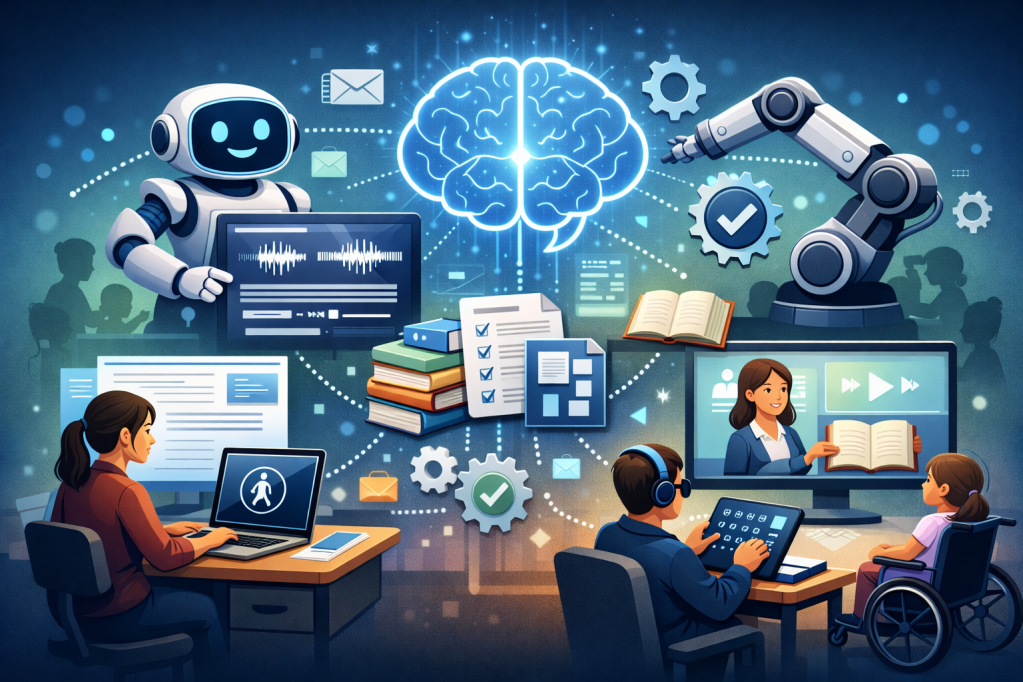
AI-powered tools can assist with captioning lectures, transcribing discussions, formatting academic documents, and running accessibility checks across digital content. AI can improve digital accessibility by identifying barriers early and automating inclusive design practices. When used responsibly, automation allows universities to scale accessibility efforts without increasing faculty workload, ensuring consistent access to learning materials.
8. Establish Educational Institution-Wide Accessibility Policies
Educational Institution policies ensure accountability and long-term success in making learning materials accessible. Accessibility should be embedded into institutional policy rather than handled on a case-by-case basis. Clear guidelines for content creation, procurement, and review help educational institutions maintain consistency.
Conclusion
Accessible education begins with intentional design. When Educational Institutions invest in inclusive practices, training, and technology, they move closer to delivering equitable learning experiences for every student! By focusing on providing accessible educational resources and adopting sustainable strategies, Institutions can build learning environments that support participation, independence, and success for all learners.
Author Bio

Emilie Brown works with the Content Marketing team at Continual Engine, a leading AI-based accessibility solutions provider, which enables organizations to create digitally accessible content in compliance with universal accessibility laws. Her approach and methodology are simple, concise, and to the point, and connect with readers seeking solution-driven content on topics related to accessibility and remediation. Apart from working, she loves to spend time with her dog, volunteer, and play her guitar.
 Online Education and EdTech